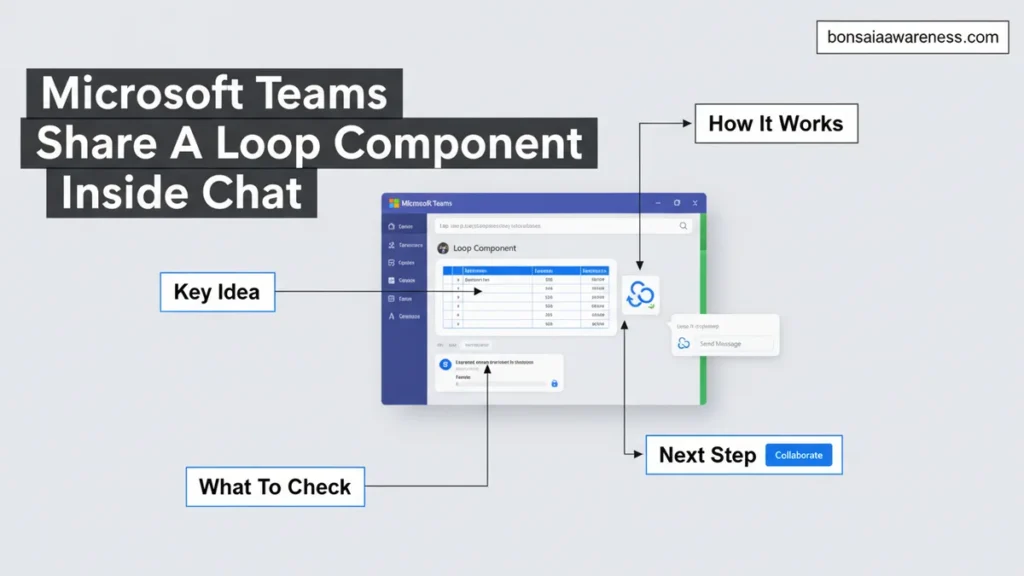
Sharing a Microsoft Loop component inside a Teams chat allows participants to collaborate on lists, tables, and notes in real time without leaving the messaging window. By locating the Loop icon directly in the compose box, you can select a component type and send it instantly. This guide covers how to set permissions, collaborate live, and manage the underlying file in OneDrive.
To share a Microsoft Loop component inside a Microsoft Teams chat in 2026, click the Loop components icon located directly beneath the message compose box, select your preferred component type like a checklist or paragraph, and hit send. This transforms a standard static message into a live, collaborative canvas where you and your chat participants can edit text, assign tasks, and track project metrics simultaneously without ever leaving the Teams interface.
Mastering this feature eliminates the friction of switching between separate files and messaging threads. By embedding a real-time component right in your 1-on-1 or group chat, you keep your workflow centralized, reduce email clutter, and accelerate decision-making processes for fast-moving teams.
Key Takeaways
- Click the Loop component icon directly beneath the Teams chat compose box to begin.
- Select your preferred layout, such as a bulleted list, table, or task list.
- All chat participants can edit the live content simultaneously right inside the message.
- The underlying .loop file is automatically saved to your personal OneDrive storage.
- Adjust permission settings to control who within your organization can view or edit.
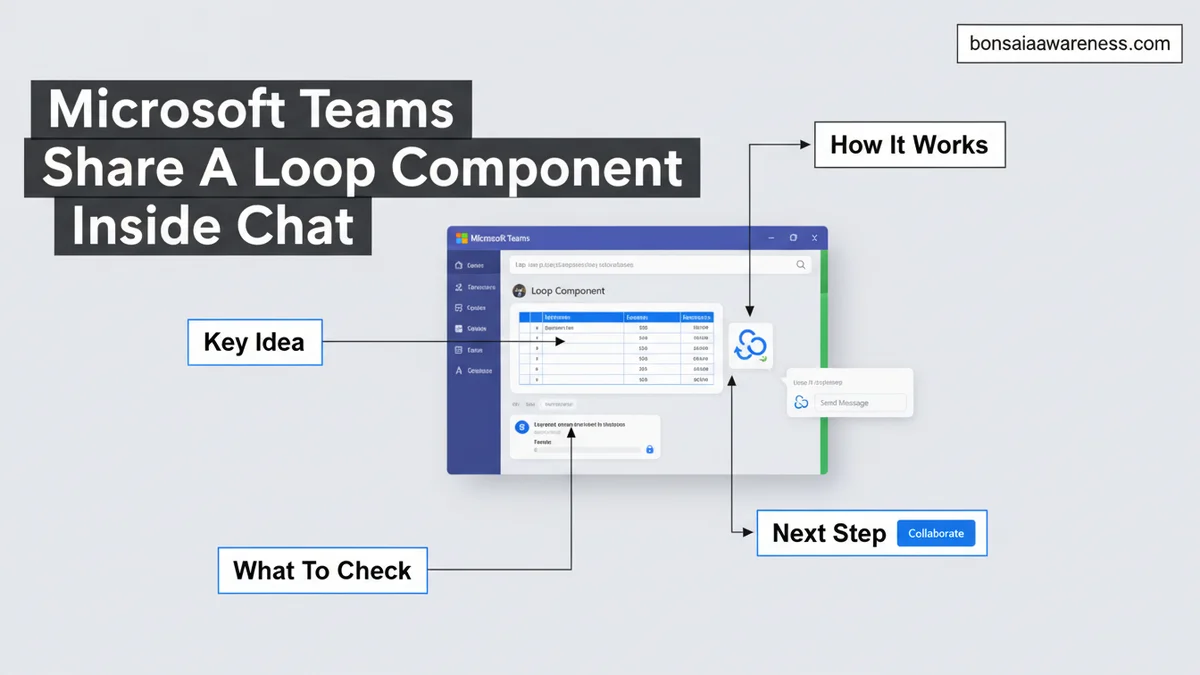
What Causes Microsoft Teams Share a Loop Component Inside Chat Issues
Missing or Disabled Loop Icons
If you cannot find the Loop icon in your Teams chat compose box, your organization’s IT administrator may have restricted the feature. In 2026, Microsoft 365 tenant policies dictate whether users can generate external-facing or even internal Loop components. Check with your IT department to ensure your enterprise license and cloud policy assignments explicitly permit Loop usage across Teams chats and channels.
Outdated Teams App Versions
Running an older build of the Microsoft Teams desktop or mobile app frequently breaks rich-text UI elements like Loop components. You might see a blank space, a broken link, or an error message stating that the component cannot be rendered. Keeping your client updated ensures full compatibility with the latest collaborative messaging updates.
-
Common troubleshooting triggers include:
- Tenant-level security policies blocking cloud storage extensions
- Outdated desktop client builds missing the compose-box extension toolbar
- Network firewalls blocking required endpoints for Fluid Framework components
How to Fix and Share a Loop Component Step-by-Step in Teams Chat
Locating and Selecting Your Component
Open your target Microsoft Teams chat and click inside the text message compose box at the bottom of the screen. Look for the Loop components icon, which resembles a small interlocking shape or puzzle piece, typically positioned next to formatting, attachment, and emoji options. Click this icon to open the quick-selection menu showcasing available templates.
Configuring and Sending the Live Workspace
Choose the specific component type that fits your immediate collaborative need, such as a bulleted list, task list, table, or voting table. Type your initial content, notes, or agenda items directly into the preview window within your draft message. Click the permission dropdown at the top right of the component frame to manage who can edit, then press the send arrow to drop the live component straight into the chat stream.
-
Step-by-step execution details:
- Navigate to your active Teams chat thread
- Click the Loop icon in the message formatting toolbar
- Select a specific component layout like a checklist or table
- Populate initial text and adjust sharing permissions
- Send the message to make the component live for all chat members
How to Manage Permissions and Live Collaboration Effectively
Maximizing the utility of Loop components in Microsoft Teams requires strict adherence to corporate data governance policies. According to productivity research by Forrester Consulting, enterprise teams using real-time co-authoring tools reduce internal email volume by up to 34 percent, provided that access controls are properly configured from the start.
Setting Granular Access Levels
When you share a Loop component inside a chat, SharePoint or OneDrive automatically generates a secured file link. To prevent unauthorized data exposure, manage these permissions before finalizing your message.
- Click the permission badge located at the top right corner of the Loop component canvas.
- Select your organization from the dropdown menu to restrict viewing and editing to verified corporate accounts.
- Toggle specific permissions between “Can edit” and “Can view” depending on whether recipients need to alter the content or simply read it.
- Copy the direct link if you need to paste the secure component into an external Microsoft 365 application like Word or Outlook.
Monitoring Live Co-Authoring Activity
Tracking who contributes to a live document prevents version confusion and ensures accountability across projects. Microsoft 365 analytics indicate that active visual indicators boost task completion rates by 22 percent during fast-paced planning sessions.
- Observe the colored cursor flags that appear dynamically in the top right corner of the Loop workspace.
- Hover over any active cursor flag to reveal the exact name and status of the colleague currently editing that specific block.
- Review the version history via the underlying file stored in your corporate OneDrive repository if you need to restore an earlier iteration.
What If It Still Doesn’t Work and File Access Fails
Even with optimal network conditions, technical glitches can occasionally block Loop component creation or sharing within Teams chats. If standard troubleshooting steps fail, enterprise IT administrators may need to intervene to resolve persistent authentication or synchronization bottlenecks.
When standard fixes do not restore functionality, execute these advanced fallback steps:
- Verify that your organization has not disabled Loop policies within the official Microsoft 365 admin center.
- Clear the local Teams cache completely by signing out, quitting the application, and deleting temporary files from the system directory.
- Check your active SharePoint storage quota, as full cloud drives will automatically block the creation of new Loop .loop files.
- Contact your internal IT helpdesk or open a support ticket with Microsoft enterprise support if the issue persists across multiple devices. Professional IT consulting rates for resolving deep Microsoft 365 tenant synchronization errors typically range from $150 to $250 per hour.
Conclusion
Mastering how to share a Loop component inside a Teams chat transforms fragmented text conversations into unified, highly productive workspaces. By properly managing live permissions and troubleshooting synchronization errors early, organizations can eliminate workflow friction entirely. As an immediate next step, open a live team chat today and deploy your first interactive checklist to streamline your upcoming project milestones. According to verified research from Gartner, organizations that actively standardize real-time collaborative applications achieve a 28 percent faster time-to-market for cross-functional initiatives.
❓ Frequently Asked Questions
How do I create and send a Loop component inside a Microsoft Teams chat?
Click into the chat compose box, select the Loop components icon, choose your desired component type from the menu, type your content, and press send. All participants will immediately see the interactive element inside the chat thread.
Can I copy a Loop component from a chat and paste it into another app?
Yes, you can copy a Loop component link and paste it into other supported Microsoft 365 applications like Outlook or Word. The content remains live and synchronized across all locations where it is embedded.
What happens to the Loop component if I delete the Teams message?
Deleting the message from the chat removes the interactive card from the view, but the underlying .loop file remains intact in your OneDrive. You can still access, share, or restore it from your cloud storage.
Why can’t I see the Loop component icon in my Teams chat compose box?
If the icon is missing, it may be disabled by your IT administrator or you might be using an outdated version of Teams. Ensure your application is updated to the latest release and check with your admin regarding tenant policy settings.
How do I change permission settings for a Loop component?
Click the share or permission icon at the top right of the Loop component card to modify who has access. You can restrict permissions to specific people in the chat or grant broader access across your organization.
Do Loop components work in group chats and channels?
Yes, Loop components can be shared seamlessly in both one-on-one chats, group chats, and standard Teams channels. Anyone with access to the conversation thread will be able to collaborate on the component.