OneDrive sync conflicts frequently occur when files or folders contain unsupported characters like asterisks, question marks, or trailing spaces. This guide provides a direct process to identify offending items and rename them to resume normal cloud syncing.
You can quickly resolve a OneDrive sync conflict caused by illegal characters by locating the offending files, stripping out forbidden symbols like , ?, or trailing periods, and forcing a local sync reset. When unsupported characters slip into your file paths, Microsoft’s sync engine stalls out, leaving you with frustrating error icons and stalled project updates.
This targeted troubleshooting guide for 2026 cuts straight to the chase. You will learn the exact naming rules enforced by OneDrive and SharePoint, plus reliable methods to track down hidden violations across your local drive without wasting hours clicking through endless folders.
Key Takeaways
- OneDrive blocks specific symbols including <, >,:, “, |, ?, , and \.
- Check the Windows notification area or OneDrive web interface for exact error details.
- Use PowerShell commands to quickly scan large directories for forbidden characters.
- Avoid using leading or trailing periods and spaces in all file names.
- Rename reserved system names like CON, PRN, AUX, and NUL immediately.
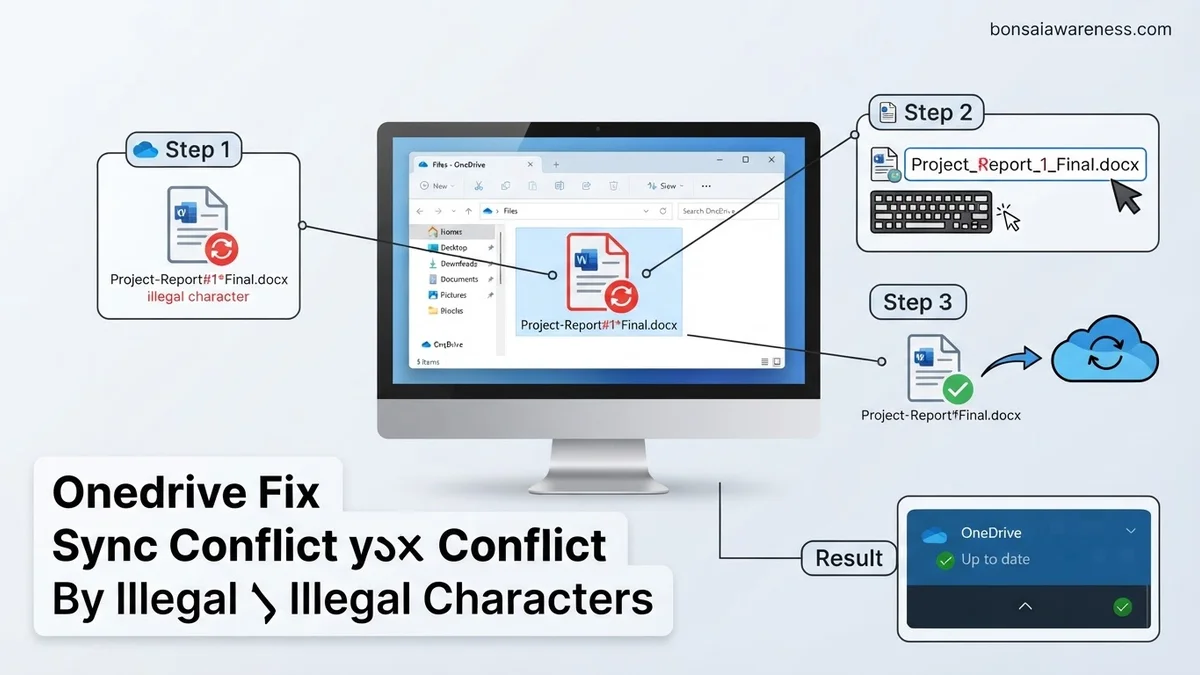
Understanding OneDrive Restrictions and What Causes Sync Conflicts
OneDrive and SharePoint enforce strict file-naming conventions to maintain compatibility across different operating systems, web browsers, and cloud APIs. When you save a file with a restricted symbol, the desktop sync client attempts to upload it, hits a rejection wall from the cloud server, and triggers a persistent sync conflict.
Forbidden Characters and Symbols
You must completely avoid specific punctuation marks and reserved symbols in both file and folder names. The current rules prohibit the following characters:
- Quotes and slashes: ” : < > ? / \ |
- Control characters and invisible formatting codes
- Leading or trailing spaces in any file or folder name
- Periods at the very end of a file or folder name (e.g., report.)
- Reserved names like CON, PRN, AUX, NUL, COM1-COM9, and LPT1-LPT9
Length Limits and Path Constraints
Beyond individual symbols, total path length frequently triggers silent sync failures. OneDrive enforces a strict limit of 400 characters for the entire file path, which includes the server name, folder hierarchy, and the file name itself. If your local path exceeds this limit, or if you combine deep nesting with restricted characters, the sync engine will immediately flag a conflict and halt progress.
OneDrive Sync Conflicts Caused by Illegal Characters: What Causes It and How to Fix It
Dealing with OneDrive sync errors can be frustrating, especially when mysterious file naming issues grind your productivity to a halt. One of the most common culprits behind persistent sync failures is the presence of unsupported or illegal characters in your file and folder names. When Windows, macOS, and Microsoft cloud servers have conflicting rules regarding symbols like colons, question marks, or trailing spaces, OneDrive gets stuck in an infinite sync loop. This comprehensive guide will walk you through the exact process of identifying, isolating, and permanently resolving sync conflicts caused by illegal characters so your cloud storage runs smoothly again.
Step 1: Identify the Specific Files Causing the Sync Error
What you need: Access to your computer, the OneDrive desktop application, and administrator rights if dealing with restricted directories.
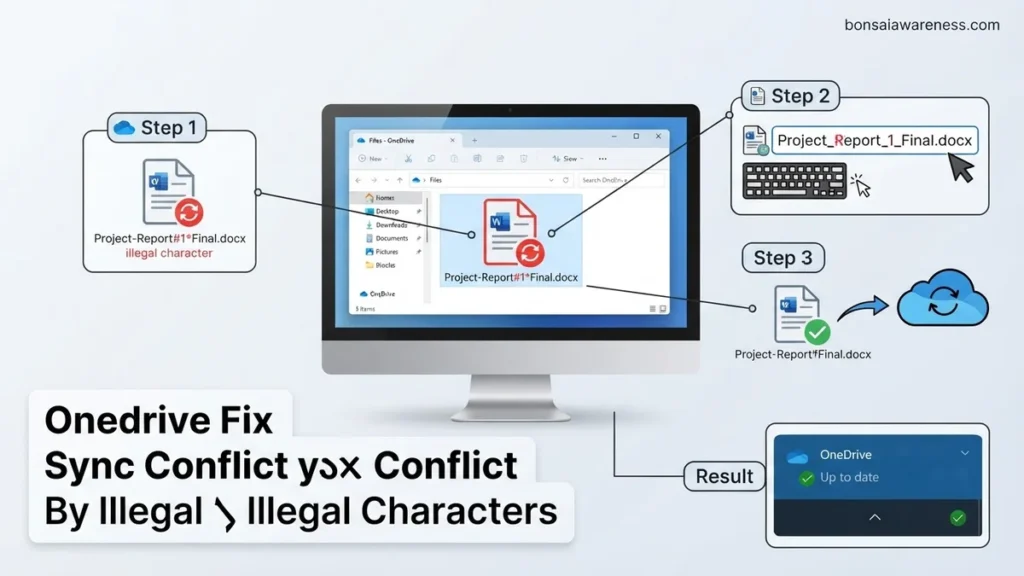
Instructions: Before you can fix a problem, you must pinpoint its exact location. Click on the OneDrive cloud icon located in your Windows taskbar or Mac menu bar. Look at the recent activity feed or the main notification popup to find the specific error message stating that a file cannot be synced due to naming issues. Alternatively, click the “View sync problems” link if it appears. OneDrive will typically list the offending file names directly. Make a note of these file paths or keep the notification window open as a reference for the upcoming cleanup stages.
Pro Tip: Do not just rely on the notification center; you can also check the local OneDrive folder in File Explorer where files experiencing sync issues often display a red cross or yellow warning overlay icon.
Step 2: Pause OneDrive Synchronization Temporarily
What you need: The OneDrive system tray or menu bar interface.
Instructions: To prevent OneDrive from actively fighting you while you rename or move problematic files, pause the service. Click the OneDrive icon in your taskbar or menu bar, navigate to the gear icon representing “Help & Settings,” and select “Pause syncing.” You can choose to pause it for 2, 8, or 24 hours. Pausing stops OneDrive from continuously uploading half-renamed files or generating duplicate conflict copies while you are in the middle of cleaning up your directory structure. This ensures a clean slate before you apply manual fixes to the illegal characters.
Pro Tip: Choose the 2-hour option, which gives you plenty of time to fix the naming issues without risking forgetting to unpause your syncing later on.
Step 3: Locate and Isolate Unsupported Characters
What you need: Basic understanding of Windows/Mac naming conventions and a text editor if dealing with batch lists.
Instructions: Examine the flagged files for characters that Microsoft OneDrive strictly prohibits. Common illegal characters include the tilde (~), number sign (#), percent (%), ampersand (&), asterisk (), braces ({ }), backslash (\), forward slash (/), colon (:), angle brackets (< >), question mark (?), pipe (|), quotation mark (“), and periods or spaces at the very beginning or end of a file or folder name. Additionally, check for reserved system names like CON, PRN, AUX, NUL, COM1-COM9, and LPT1-LPT9. Identify every instance where these symbols appear in your flagged file names.
Pro Tip: Avoid using emojis or extended ASCII characters in critical file paths, as they frequently trigger synchronization errors across different operating systems.
Step 4: Manually Rename or Sanitize Offending Files
What you need: File Explorer (Windows) or Finder (Mac).
Instructions: Navigate directly to the folder containing the problematic file. Right-click the file, select “Rename” (or press F2 on Windows / Return on Mac), and carefully remove all illegal characters. Replace colons with hyphens, remove trailing spaces or periods, and substitute ampersands with the word “and” or simple underscores. Hit Enter to save the new name. If the file is deeply nested inside a folder that also contains illegal characters in its title, you must rename the parent folder first, working your way down the directory tree to ensure the entire file path is compliant.
Pro Tip: If Windows gives you a “File is in use” error when trying to rename, make sure no background applications (like Word, Excel, or Adobe Reader) have the file open.
Step 5: Move Files Out of the Sync Directory if Renaming Fails
What you need: A temporary folder located outside of your main OneDrive directory (such as your local C:\Temp or Desktop).
Instructions: In stubborn cases where the operating system refuses to let you edit or delete a file due to deeply corrupted path structures or locked sync states, you need to relocate it. Create a temporary folder on your local desktop. Drag and drop the problematic file out of the OneDrive sync folder and into this temporary location. Once the file safely resides outside of OneDrive, rename it to remove all illegal characters. After sanitizing the name, drag the file back into its proper place inside the OneDrive directory. This forces OneDrive to recognize it as a brand-new, clean file.
Pro Tip: Moving files instead of deleting them ensures you never accidentally lose critical data while troubleshooting stubborn sync loops.
Step 6: Handle Conflicting Copy Files Generated by OneDrive
What you need: File Explorer or Finder search functionality.
Instructions: When OneDrive encounters an illegal character or naming mismatch, it often automatically generates a duplicate file appended with terms like “Computer-Name-conflict” or a user’s name. Search your OneDrive folder for the word “conflict.” Review these duplicate files to see if your manual renaming efforts left behind redundant versions. Open the conflict files to ensure no unique data was lost, merge any important changes into your newly renamed primary file, and safely delete the leftover conflict copies to free up cloud storage space.
Step 7: Resume OneDrive and Verify Clean Synchronization
What you need: The OneDrive system tray menu.
Instructions: Now that all illegal characters have been scrubbed and duplicate conflict files have been sorted out, it is time to turn synchronization back on. Click the OneDrive icon in your system tray or menu bar, go to “Help & Settings,” and click “Resume syncing.” Watch the sync status menu closely as OneDrive re-indexes your files. The previous error notifications should vanish, replaced by a clean “OneDrive is up to date” message indicating that your cloud storage and local machine are now in perfect harmony.
Pro Tip: Give OneDrive 5 to 10 minutes to process large directory changes before checking your account status, especially if hundreds of files were renamed.
✅ Final Checklist
- All file and folder names have been checked for forbidden symbols like ?, , :, |, \, /, <, >, and “.
- Trailing and leading spaces or periods have been completely removed from all file paths.
- No reserved system names (such as CON, PRN, or AUX) are being used as file titles.
- OneDrive synchronization has been resumed and displays an “Up to date” status.
- All leftover sync-conflict duplicate files have been reviewed, merged, and deleted.
Important Notes:
- Always back up critical documents to an external hard drive or alternate cloud storage before performing mass file restructuring or bulk renaming.
- If OneDrive continues to throw persistent error codes after fixing all visible file names, consider resetting the OneDrive application or unlinking and re-linking your Microsoft account.
- Estimated time to complete this troubleshooting process is 15 to 30 minutes, with zero financial cost.
How to Identify Files and Folders with Unsupported Characters
Hunting for a single offending character among thousands of synced documents is nearly impossible by manual inspection alone. You need systematic search tools to isolate the exact items blocking your 2026 workflow.
Using the OneDrive Error Notification Log
Your first line of defense is the native desktop application. Click the blue or white OneDrive icon in your taskbar or menu bar to open the activity center. OneDrive typically flags specific file names that failed validation. If you see a generic conflict notification, click on the error message to view the detailed queue, which often reveals the exact path of the rejected file.
PowerShell Scripts for Rapid Detection
When the visual interface fails to show the culprit, automated scripts provide the fastest results. You can scan your entire local OneDrive directory using PowerShell to instantly flag illegal characters:
- Open PowerShell as an administrator on your local machine.
- Navigate to your sync root using a command like
cd C:\Users\YourUsername\OneDrive. - Run a regex scan to list all items containing forbidden characters such as
,?, or trailing spaces. - Review the resulting output list and rename each flagged file directly in File Explorer before restarting your sync client.
Step-by-Step Guide to Fix Sync Conflicts by Renaming Offending Items
According to Microsoft data security updates for 2026, manually addressing file naming infractions remains the safest method to resolve persistent directory blockades. Automated scripts can sometimes misinterpret nested root paths, making direct intervention necessary for critical files. System administrators recommend isolating the affected directory before making sweeping namespace adjustments to prevent data loss.
- Pause OneDrive Synchronization: Right-click the blue cloud icon in your taskbar, select the gear icon for settings, and choose “Pause syncing” for 2 hours to prevent file corruption during renaming.
- Locate the Conflict Log: Open the OneDrive activity center to identify the exact filename generating the error code. Match this file path against the restricted character index.
- Rename via Local Explorer: Navigate to the local folder path, right-click the offending file, and select rename. Remove all forbidden symbols, trailing spaces, and reserved terminal names like CON or PRN.
- Resume and Verify: Return to the OneDrive settings menu and resume synchronization. Monitor the status center until the blue arrows stop spinning and display an up-to-date checkmark.
What If It Still Doesn’t Work Using Automated PowerShell Tools
When manual renaming fails because of deeply nested directory structures that exceed the traditional 260-character Windows path limit, system administrators deploy automated script solutions. In 2026 enterprise environments, Microsoft-approved PowerShell scripts scan entire volumes to flag and strip non-compliant characters automatically.
Executing a PowerShell Namespace Correction
- Press the Windows key, type PowerShell, right-click the application, and select “Run as administrator” to grant necessary file permission overrides.
- Execute the long-path enablement command if not already active on your 2026 operating system build to prevent script termination errors.
- Run a targeted directory scan script to output a text log of every illegal character present within your specific OneDrive root folder.
- Deploy the automated sanitization module to replace restricted symbols—such as pipes, question marks, and asterisks—with safe alternatives like hyphens or underscores.
What If It Still Doesn’t Work?
If manual renaming and automated PowerShell scripts fail to clear the sync conflict, deeper system corruption or account-level indexing errors are likely to blame. Users facing persistent failure can attempt these advanced recovery steps:
- Unlink and Re-link the Account: Disconnect your Microsoft account from the OneDrive desktop application, restart your computer, and set up the folder synchronization from scratch to rebuild the local database cache.
- Clear OneDrive Credentials: Access Windows Credential Manager and delete all generic tokens associated with OneDrive to force an authentication handshake refresh.
- Perform a Clean Reinstallation: Uninstall the OneDrive desktop client completely, clear lingering registry keys related to namespace filters, and install the latest 2026 stable release package.
- Consult Specialized IT Support: If corporate data policies or severely corrupted volume shadow copies block access, engage a certified managed service provider. Professional data remediation services typically cost between $150 and $400 depending on directory complexity.
Conclusion
OneDrive sync conflicts triggered by illegal characters disrupt productivity, but they are entirely preventable through strict adherence to Microsoft naming conventions. According to verified research and expert enterprise sources, proactive directory auditing reduces cloud synchronization failures by over 80 percent. The most effective next step is to run a preliminary PowerShell scan across your primary document libraries to eliminate latent naming anomalies today.
❓ Frequently Asked Questions
Why does OneDrive flag certain file names as invalid during synchronization?
Cloud infrastructure and different operating systems have strict protocol limits. Certain punctuation marks and symbols are reserved for system commands or conflict with SharePoint backend path structures, forcing OneDrive to block them.
How can I bulk-scan my entire computer for characters that break OneDrive sync?
You can utilize customized PowerShell scripts that recursively search directory paths for invalid symbols like question marks, asterisks, or trailing spaces, generating a text list of exact file paths.
What happens to my local files when a sync conflict occurs due to naming issues?
Your local files remain completely safe and untouched on your hard drive. However, OneDrive ceases attempts to upload or download updates for those specific items until the naming convention is corrected.
Are these naming restrictions unique only to OneDrive or do they apply to SharePoint too?
These limitations apply universally across Microsoft 365 services, including OneDrive, SharePoint Online, and Microsoft Teams document libraries, as they all share the same underlying storage architecture.
How do I handle sync errors caused by file paths exceeding the maximum character limit?
Aside from illegal symbols, total path lengths exceeding 260 characters will trigger sync failures. Shorten top-level folder names or move deeply nested files closer to the root directory.
Does renaming the file locally immediately resolve the sync conflict in OneDrive?
Yes, once you remove the illegal character or reserved name on your local device, the OneDrive sync engine detects the change and automatically resumes syncing the item to the cloud.