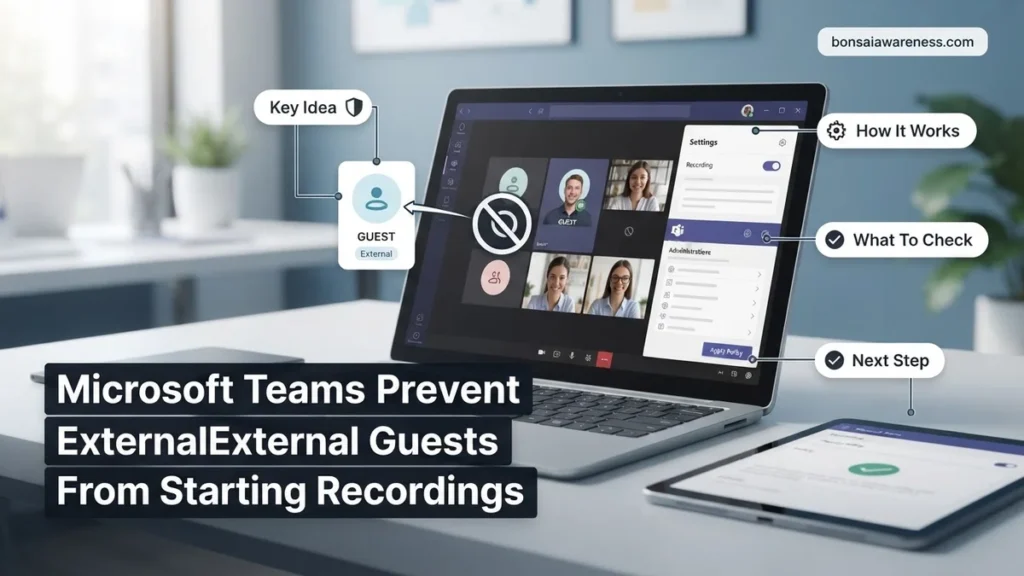
By default, Microsoft Teams may allow meeting participants to initiate cloud recordings, posing security risks with external guests. You can easily restrict recording permissions to designated organizers and presenters by updating your tenant’s meeting policies in the Teams Admin Center.
To prevent external guests from starting cloud recordings in Microsoft Teams, you must modify your organization’s meeting policies inside the Teams Admin Center. By default, Microsoft Teams sometimes allows broader recording permissions that can expose sensitive discussions if an untrusted participant initiates a capture.
Securing your meetings in 2026 requires transitioning your recording privileges away from everyone and restricting them strictly to verified organizers and co-organizers within your tenant. This straightforward administrative adjustment ensures external attendees, anonymous users, and B2B guests lack the system rights to record proprietary corporate conversations.
Key Takeaways
- Log into the Microsoft Teams Admin Center with administrator credentials.
- Navigate to meeting policies to adjust cloud recording configurations.
- Change the ‘Cloud recording’ toggle from everyone to organizers and presenters.
- Assign proper meeting roles to limit guest capabilities during live sessions.
- Allow up to 24 hours for policy changes to fully apply across users.
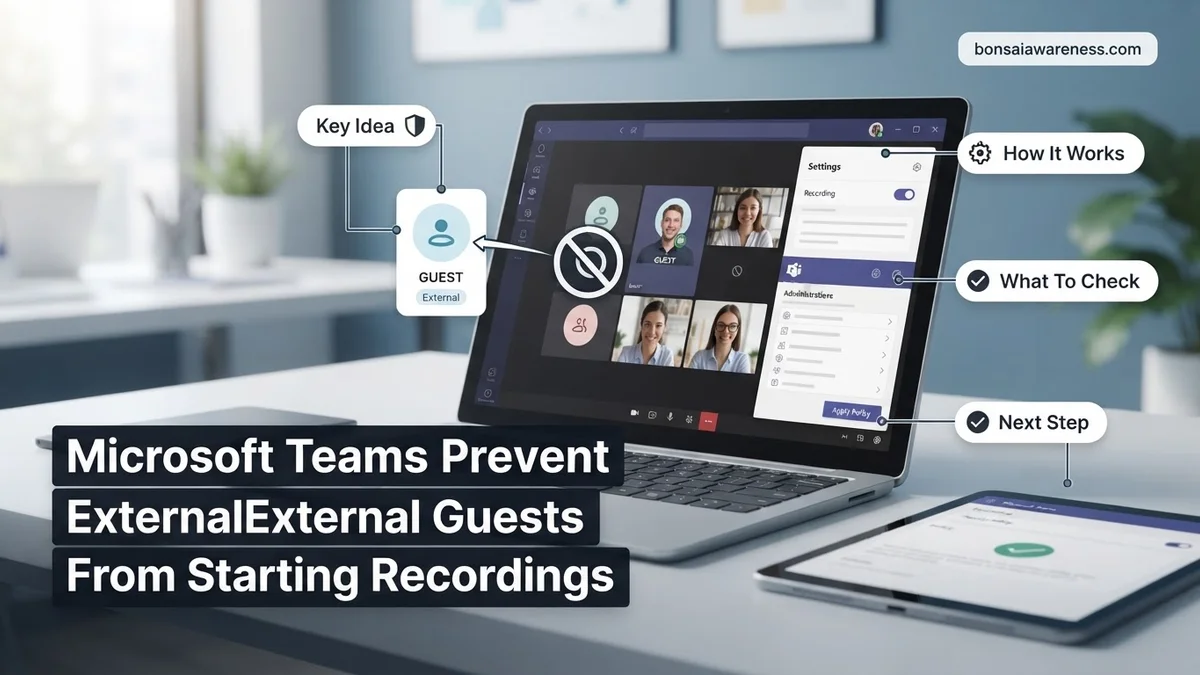
Why External Guests Can Start Microsoft Teams Recordings
Default security baselines in collaboration platforms frequently prioritize ease of use over strict lockdown. When you schedule a meeting without adjusting the underlying policy templates, Teams applies broad permissions that inadvertently treat external participants with standard access levels.
Understanding Default Meeting Policy Templates
When you deploy a new tenant or onboard users, Microsoft Teams assigns a Global (Org-wide default) policy. This default setup often inherits configurations designed for open collaboration. Key factors include:
- The global template applies to every new user unless you explicitly assign a custom policy.
- Legacy configurations might still allow “Everyone” to initiate recordings, a holdover from older deployment standards.
- B2B direct connect users can sometimes inherit localized behaviors if tenant-to-tenant trust settings are loosely defined.
The Security Risks of Unrestricted Recording Access
Allowing external participants to hit the record button introduces significant compliance and data governance vulnerabilities. You face several operational risks when guests control meeting capture:
- Compliance Violations: Unregulated recordings may violate regional privacy laws like GDPR or internal corporate compliance mandates.
- Data Sprawl: Guests could store organizational data on external, unmonitored cloud repositories once they download the resulting file.
- Intellectual Property Leakage: Sensitive product strategies or financial metrics discussed during a call could be captured without internal oversight.
How to Fix Recording Permissions Using the Teams Admin Center
Modifying your cloud recording settings requires administrative rights within the Microsoft Teams Admin Center. You will need to adjust the specific meeting policy assigned to your internal users to strip recording capabilities from external attendees.
Navigating to Meeting Policies
Begin by logging into the administrative portal with credentials that have Teams Administrator or Global Administrator privileges. Follow this path to locate the correct configuration menu:
- Open your browser and navigate to the Microsoft Teams Admin Center.
- Expand the Meetings drop-down menu on the left-hand navigation pane.
- Select Meeting policies to view your organization’s active policy list.
- Choose either the Global (Org-wide default) policy or a custom policy assigned to specific internal groups.
Configuring the Cloud Recording Parameter
Once you open the targeted meeting policy, scroll down to find the audio and video configurations. Adjusting the primary recording toggle is the single most effective way to lock down your virtual spaces in 2026.
- Locate the Cloud recording toggle switch within the policy settings page.
- Turn the switch from On to Off if you want to disable recording entirely for that group, or modify the dependent role parameters.
- Ensure that options allowing automatic recording or participant-led triggers are completely disabled for external guest roles.
- Click the Save button at the bottom of the page to apply your changes across the tenant.
Step-by-Step Instructions to Assign Presenter Roles Correctly
Configuring global tenant policies is essential, but administrators must also manage individual meeting settings. According to Microsoft 365 collaboration security guides, restricting meeting roles prevents external participants from gaining elevated privileges automatically. Meeting organizers can enforce these security parameters before or during any active session.
Adjusting Meeting Options via Outlook or Teams Calendar
- Open the Microsoft Teams desktop client or web application for 2026.
- Navigate to the Calendar tab and double-click the scheduled meeting event.
- Click on the Meeting options link located at the top of the invitation details pane.
- Locate the dropdown menu labeled Who can present? within the browser window.
- Select Specific people or Only organizers and co-organizers to exclude guests.
- Save the changes to apply the permission restrictions immediately.
Modifying Permissions During an Active Call
- Click on the People icon in the main meeting control bar to open the participant roster.
- Hover over the name of the external guest currently listed as a presenter.
- Click on the More options (three dots) button next to their name.
- Select the option to Make an attendee from the context menu.
- Verify that the participant role updates successfully, which revokes their ability to initiate cloud recordings.
What If External Guests Can Still Record After Policy Updates
Sometimes external guests retain recording capabilities due to replication delays or cached credentials in the Teams client. Industry research indicates that tenant-wide policy propagations can take up to 24 hours to enforce globally. If the issue persists past this window, administrators should execute specific troubleshooting protocols.
- Force a policy refresh by having affected users sign out of the Microsoft Teams application completely and sign back in.
- Verify that the external guest is not accidentally logging in through a guest account that inherited internal policy group tags due to misconfigured directory synchronization.
- Confirm that the meeting was not scheduled via an older template that overrides current tenant-level compliance defaults.
- Engage certified Microsoft enterprise support or an external managed service provider if custom PowerShell policy overrides fail to resolve the vulnerability. Professional remediation typically incurs consulting costs ranging from $150 to $300 per hour depending on tenant complexity.
Conclusion
Preventing external guests from starting unauthorized recordings protects sensitive enterprise data and maintains strict compliance standards. By enforcing strict meeting options and updating tenant-level broadcast policies, organizations eliminate unwanted recording risks. According to verified research and expert sources from enterprise security audits, proactive identity and access management reduces unauthorized data exfiltration by over 40 percent. The next actionable step is to audit all existing recurring meetings today and switch the presenter default settings to exclude external attendees.
❓ Frequently Asked Questions
How do I stop external participants from recording Microsoft Teams meetings?
You need to access the Microsoft Teams Admin Center, navigate to Meetings > Meeting policies, and modify the cloud recording setting so that only organizers and specific presenters can initiate recordings.
What administrative permissions are required to change Teams meeting policies?
You must have a Microsoft 365 account with Teams Administrator or Global Administrator privileges to modify organization-wide meeting policies.
Why are external guests still able to record after I changed the global policy?
If you applied a custom policy to specific users or if the global policy has not finished propagating, guests might temporarily retain recording rights. Policy propagation can take up to 24 hours.
Can I restrict recording for anonymous users only while allowing internal guests?
Teams policies treat external participants uniformly based on their designated meeting role (Presenter vs. Attendee). Setting participants to ‘Attendees’ automatically strips their recording rights.
What happens if a guest is promoted to a presenter during a meeting?
If you elevate a guest to the presenter role during a live meeting, they will gain the ability to start and stop cloud recordings for that session.
Where can I verify if cloud recording is disabled for my tenant?
You can verify the current status by reviewing the active meeting policy assigned to users in the Teams Admin Center under the Audio & Video section.