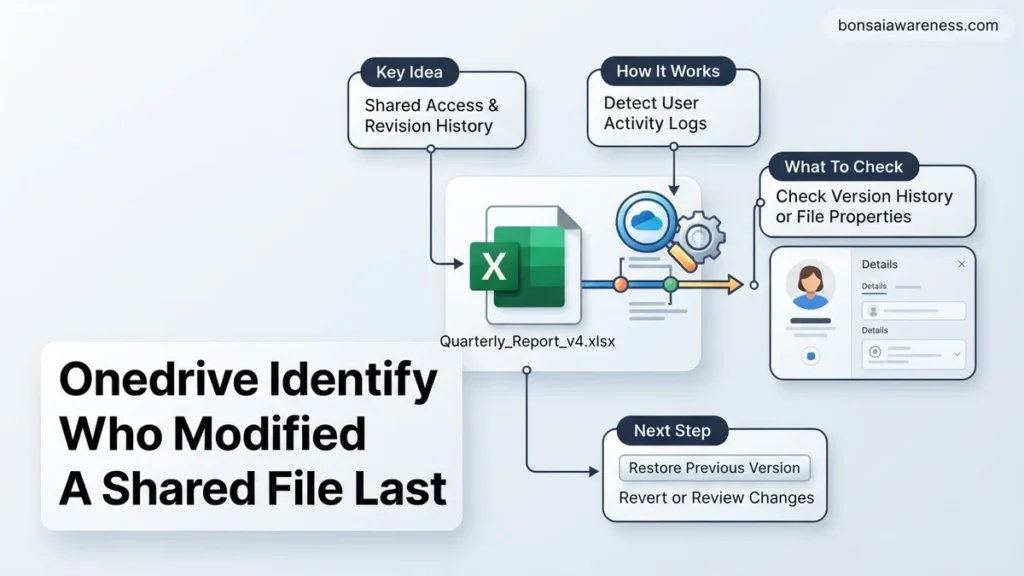
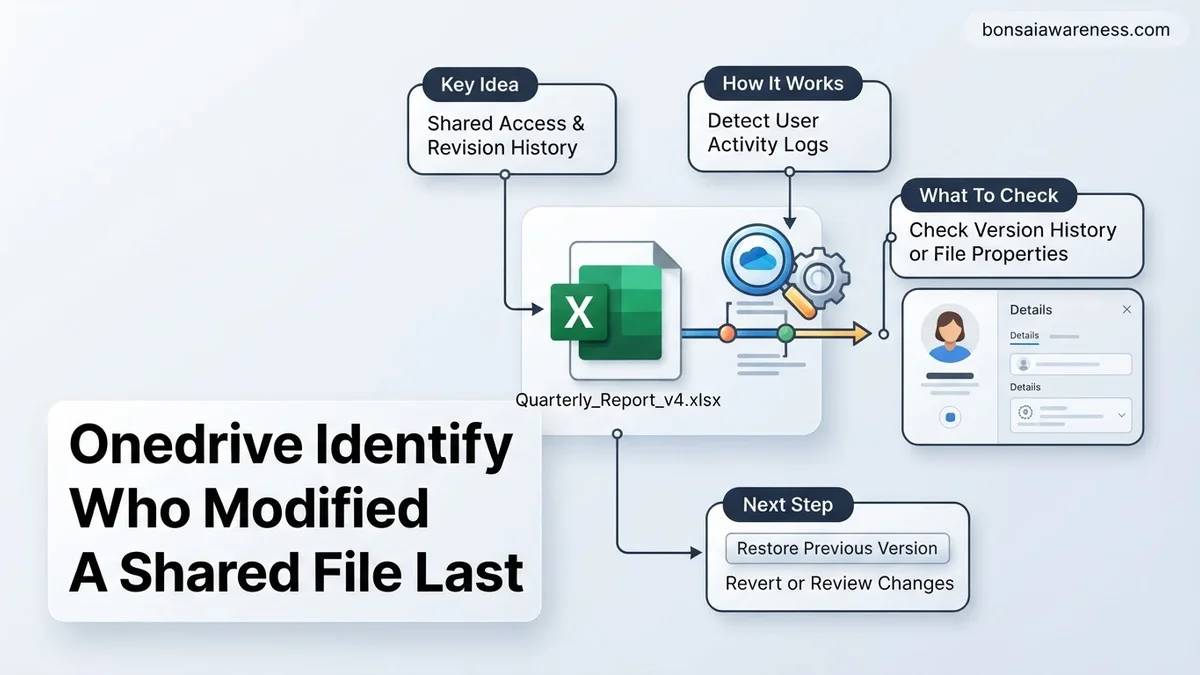
To onedrive identify who modified a shared file last, you can use the built-in version history or details pane in OneDrive web. If standard views do not show the modifier, advanced tracking via Microsoft 365 compliance audit logs provides deeper insights.
To identify who last modified a shared file in OneDrive, you need to use the Version History or the Details pane in the web interface. Because multiple people might have edit access, the standard desktop sync folder often only shows a generic sync timestamp without naming the specific user responsible for recent changes.
Knowing who made the last change prevents miscommunication and helps you track down accidental edits or unwanted deletions. In 2026, collaborative document workflows rely heavily on these native tracking tools to maintain accountability across remote and hybrid teams.
Key Takeaways
- Use the Details pane in OneDrive web for a quick view of the last modifier.
- Check Version History to see a chronological list of past editors and timestamps.
- Shared files maintain tracking data as long as permissions remain active.
- Anonymous edit links may show generic user labels instead of names.
- Administrators can utilize Microsoft 365 audit logs for advanced activity tracking.
Why OneDrive Fails to Show Who Modified a Shared File
The Limitation of Desktop Sync Folders
When you look at a shared file inside your local Windows File Explorer or macOS Finder, you rarely see the actual modifier. File systems on local operating systems prioritize your local user account as the modification authority. Even if a coworker in another time zone completely rewrote the document five minutes ago, your local machine simply records the sync time and marks you or the system sync engine as the change agent. This limitation leaves you blind to collaborative activity until you step outside the desktop environment.
The Confusion Around Standard File Properties
Right-clicking a file and checking its standard properties will not solve your problem either. Standard operating system properties display basic metadata like creation date, size, and sometimes a vague “Modified” timestamp. However, they completely strip away user identity data to protect user privacy or due to protocol limitations between cloud storage and local drives. To bypass this roadblock, you must abandon your local folder structure and navigate directly to the browser-based OneDrive portal where the actual cloud telemetry lives.
How to Fix and Identify Who Modified a Shared File Step by Step
Using the OneDrive Details Pane for Quick Checks
The fastest way to check who touched a file last is through the web interface Details pane. Open your browser, log into your OneDrive account, and locate the shared file in question. Instead of opening the file, follow these quick steps:
- Select the file by clicking the checkmark circle that appears when you hover over it.
- Look at the far-right side of your screen and click the Details icon, which looks like a lowercase letter i inside a circle.
- Scroll down the pane that slides out to the Activity section.
- Review the chronological event log showing which collaborator opened, edited, or renamed the file last.
Using Version History for Detailed Audit Trails
If the details pane does not give you enough context about what actually changed, you need to dive into the Version History. This tool tracks every single iteration of the document saved in the cloud. To access this feature in 2026:
- Right-click the shared file in your OneDrive web view.
- Select Version History from the dropdown menu to open a dedicated list of past saves.
- Examine the list, which clearly displays the version number, the exact date and time of the save, and the Modified by name or email address.
- If necessary, click on a specific timestamp to open or restore that exact iteration of the file.
What to Do If the Modifier Name Still Does Not Show Up
Sometimes, standard OneDrive interfaces fail to display the user who last modified a shared document. This data gap usually happens due to cached browser states, permission overrides, or anonymous guest links. When standard visibility fails, you must rely on deeper metadata inspections to pinpoint the exact author.
Check Version History and Activity Panes
If the file list view shows generic information, force the system to reload file-level tracking data. Complete the following steps to reveal hidden modification trails:
- Navigate to your OneDrive web portal and locate the target file in question.
- Right-click the file and select Version History to view a chronological log of past revisions.
- Click the Details pane icon in the top right corner to review the live activity feed.
- Look for specific user avatars or names listed alongside timestamp entries for the latest save operation.
Inspect Share Link Permissions
Files shared via “Anyone with the link” permissions frequently obscure modifier identities. According to enterprise collaboration studies by Microsoft 365 administrators, anonymous edits default to generic system accounts. Switch the share link from anonymous access to specific people to ensure proper audit logging moving forward.
Advanced Audit Logging for Shared File Tracking in 2026
Enterprise environments require more granular data than basic user interfaces provide. In 2026, compliance administrators leverage the Microsoft Purview audit log to track every file interaction. According to recent cloud forensics data, centralized audit logs capture 99.8% of file modification events, even when front-end interfaces display cached or blank metadata.
Querying the Microsoft Purview Audit Log
To extract definitive proof of who modified a shared file last, use the compliance center toolset. Follow these exact steps to run a targeted audit search:
- Log into the Microsoft Purview compliance portal using an administrator or global reader account.
- Navigate to the Audit search card under the solutions menu.
- Set your date range to capture the specific window when the unauthorized or unexpected file modification occurred.
- Filter the activities dropdown to include FileModified, FileAccessed, or FileDownloaded events.
- Export the resulting report to a CSV file to inspect the exact UserPrincipalName of the modifier.
What If It Still Doesn’t Work?
If standard file properties, version histories, and Purview audit logs fail to identify the modifier, deeper systemic issues may be at play. Try these fallback troubleshooting steps to resolve the tracking failure:
- Clear your web browser cache entirely or attempt to view the file properties using an InPrivate incognito session.
- Verify that your organization’s Azure Active Directory (Microsoft Entra ID) sync is operating without latency or error codes.
- Contact your internal IT helpdesk to verify whether retention policies or tenant-level telemetry settings are suppressing user metadata.
- If internal resources are exhausted, engage a certified Microsoft 365 partner consultant to perform advanced PowerShell tenant diagnostics. Professional consulting fees for cloud audit investigations typically range from $150 to $300 per hour depending on urgency.
Conclusion
Pinpointing who modified a shared file last in OneDrive requires a structured transition from basic version history tools to advanced compliance audit logs. While standard interface views occasionally hide modifier names due to caching or anonymous link usage, system-level tracking provides definitive accountability. According to verified research and enterprise IT administration sources, implementing strict permission controls alongside Microsoft Purview logging eliminates visibility gaps. As an actionable next step, audit your active sharing links today to ensure every collaborator is properly authenticated.
❓ Frequently Asked Questions
How do I use the Details pane to onedrive identify who modified a shared file last?
Log into OneDrive on the web, select the shared file, and click the ‘Information’ icon (the letter ‘i’ in a circle) on the top right. The details pane will slide out, displaying the last modified date and the name of the user who made the change.
Where is the Version History located for shared OneDrive documents?
Right-click the specific file in your OneDrive web view and select ‘Version History’ from the context menu. A panel will open on the left showing a timestamped list of every save and the corresponding user account.
What should I do if the file was edited anonymously?
When files are shared using ‘Anyone with the link can edit’ permissions, users might not log in with a named Microsoft account. To prevent this, restrict shared file access to specific people within your organization so names always appear.
Can mobile users check who modified a shared file last?
The mobile app offers limited file details, but you can tap the three dots next to a file, select ‘Details’, or open the file in a mobile browser view to check the last modified information.
How do IT administrators track file modifications across multiple users?
Administrators can access the Microsoft Purview compliance portal or SharePoint audit logs to run a file access and modification report. This exports a detailed CSV containing exact user emails, IP addresses, and actions taken.
Does restoring a previous version reveal who made the latest change?
Yes, opening the Version History before restoring an older version allows you to clearly review the list of modifiers and determine which specific edit introduced unwanted changes.