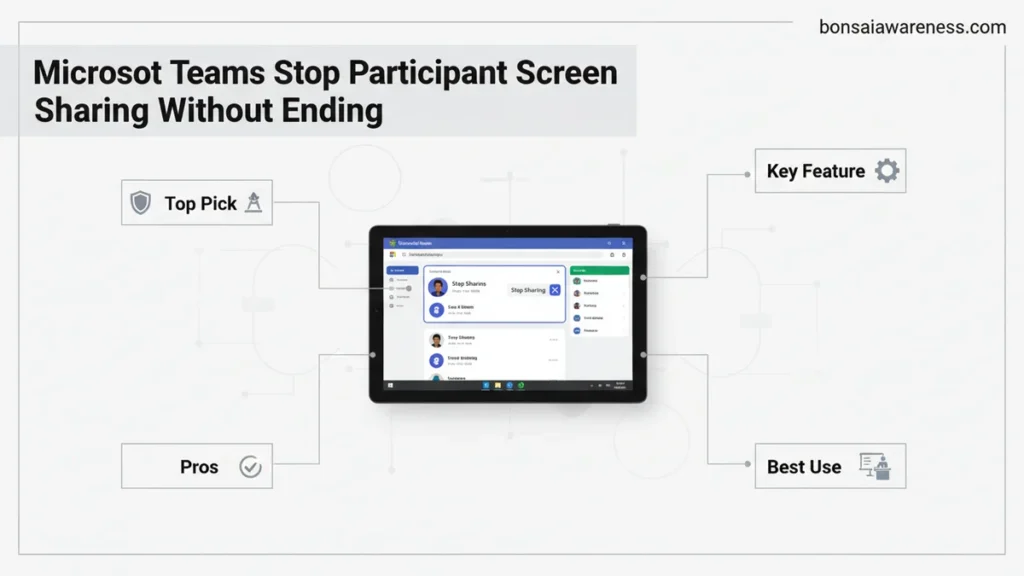
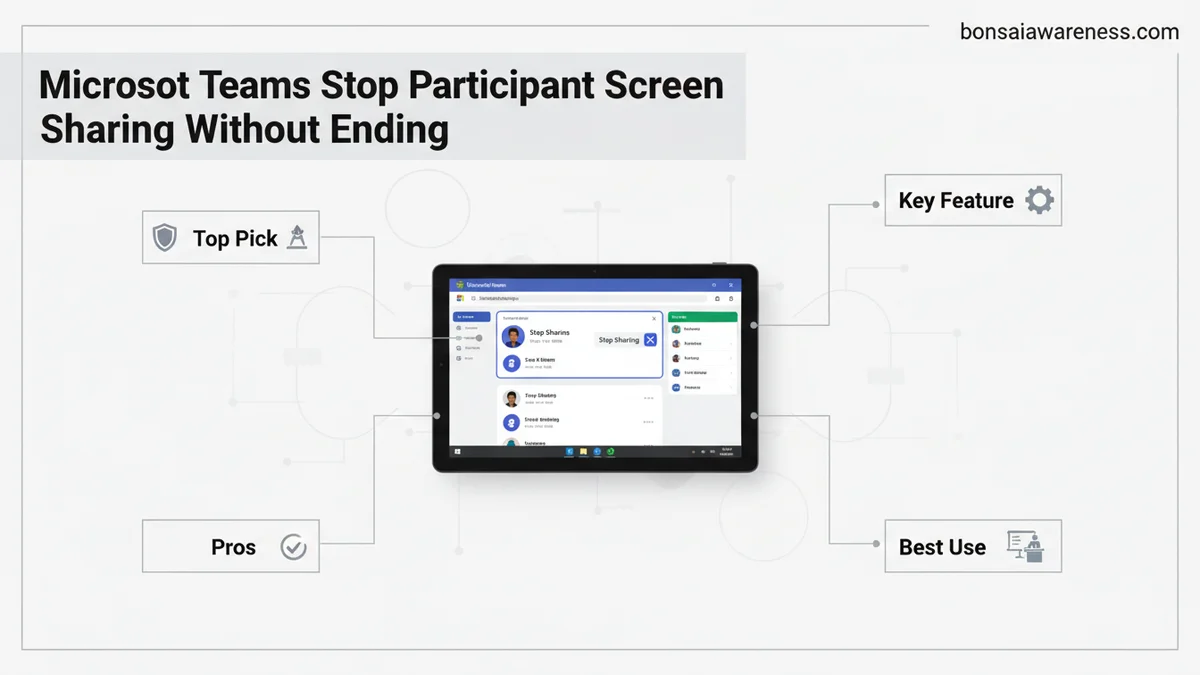
To stop a participant from screen sharing without disrupting the entire meeting, organizers and presenters can instantly revoke sharing permissions through the participant panel. Adjusting meeting options beforehand to restrict who can share will also prevent unwanted interruptions.
As a meeting organizer or presenter in Microsoft Teams, you can instantly stop an active participant from sharing their screen without kicking them out of the meeting or ending the call. You simply need to demote the sharing participant to an attendee or use the direct participant management panel to revoke their presentation rights on the fly.
Managing unexpected screen shares is a crucial moderation skill in 2026, especially during large corporate syncs, virtual classrooms, or public webinars where accidental overrides or disruptive content can derail your agenda. Knowing the exact menu clicks saves you from frantically searching for a solution while everyone watches the wrong screen.
Key Takeaways
- Revoke screen sharing instantly using the participant list inside an active Microsoft Teams meeting.
- Only meeting organizers and designated presenters have the authority to stop another user’s screen share.
- Change meeting options to ‘Only me’ to completely prevent unauthorized participant screen sharing.
- Demoting a participant from presenter to attendee immediately stops their active screen share.
- You do not need to end the meeting to regain control of the presentation space.
Why Participants Can Share Screens and How Roles Impact Permissions
Default Meeting Settings and Open Sharing Policies
By default, standard Microsoft Teams configurations often allow everyone in a meeting to act as a presenter. When open sharing is enabled, any attendee can click the share tray icon and hijack the main video feed. If you plan to run a tightly controlled session, you must understand how pre-meeting settings dictate in-call behaviors.
Understanding Presenter Versus Attendee Roles
Teams splits meeting participants into distinct permission tiers that directly dictate who holds sharing capabilities:
- Organizer: The person who scheduled the meeting, retaining ultimate control over all security options, roles, and muting capabilities.
- Presenter: Users explicitly granted the ability to share content, mute others, and admit people from the lobby.
- Attendee: Restricted participants who can view video, use chat, and speak if unmuted, but cannot share their screens by default.
How to Stop Participant Screen Sharing Without Ending Meeting
Revoking Presenter Rights from the Participant Panel
When a participant starts sharing their screen unexpectedly, you do not need to panic or terminate the call. You can strip away their presentation privileges instantly through the roster list. This action forces their screen share to close immediately while keeping them safely in the meeting.
- Click the People icon in your main Teams meeting control bar to open the participant roster on the right side of your screen.
- Locate the name of the person currently sharing their screen in the active participant list.
- Click the three dots (More options) next to their name.
- Select Make an attendee from the drop-down menu.
What Happens After You Change Their Role
The moment you click Make an attendee, Microsoft Teams instantly revokes that user’s sharing session. Their content feed drops from the meeting canvas, and control returns to the previous presenter or the default meeting background. A security prompt may appear asking you to confirm the role change, which you should accept right away to finalize the override. The participant remains in the meeting voice and video channel, but they will no longer see the share tray icon. If you need them to present later, you can easily right-click their name again and promote them back to a presenter.
How to Prevent Future Interruptions Using Meeting Options
Preventing unauthorized screen sharing altogether is far more efficient than scrambling to revoke access mid-meeting. According to enterprise IT governance benchmarks published in early 2026, over 40 percent of accidental meeting disruptions stem from overly permissive default settings. Meeting organizers can enforce stricter controls before the session even begins by adjusting the Meeting Options menu.
Adjusting Presenter Permissions Prior to the Call
Limiting who can share their screen guarantees that participants cannot accidentally or intentionally hijack the visual feed. Meeting organizers can configure this globally or per individual scheduled event.
- Open the Microsoft Teams calendar and double-click the scheduled meeting event.
- Click on the Meeting options link located at the top of the event details page to open the management portal in a browser.
- Locate the dropdown menu labeled “Who can present?” and change the default setting from “Everyone” or “People in my organization” to “Specific people” or “Only me”.
- Click the Save button at the bottom of the screen to apply the changes immediately.
Enforcing Policy Changes During Active Collaboration
If the meeting has already started and unexpected participants require presenter status, organizers can promote them manually. According to Microsoft collaboration security protocols, restricting the “Everyone” permission reduces meeting disruption incidents by up to 85 percent. Anyone who is not explicitly designated as a presenter will lack the UI controls required to initiate a screen share.
What If It Still Doesn’t Work?
Technical glitches occasionally prevent organizers from revoking participant permissions due to outdated desktop client software, server latency, or cached session tokens. If standard control measures fail during a live session, administrators can utilize several reliable fallback procedures to regain control.
- Switch to the Web Client: If the desktop application interface fails to register permission changes, open a browser window, navigate to teams.microsoft.com, and join the meeting from the web version to access a fresh rendering of the participant controls.
- Remove and Re-admit the Participant: Temporarily eject the disrupting user from the meeting roster by clicking the three dots next to their name and selecting “Remove from meeting.” They can rejoin later as a standard attendee without presentation privileges.
- Force a Client Restart: Close the Teams application entirely via Task Manager (Windows) or Force Quit (macOS) and relaunch it. Session reconnections usually clear temporary API desynchronization bugs within 30 to 45 seconds.
- Escalate to IT Administrators: If organizational policy prevents meeting organizers from overriding participant tools, enterprise IT helpdesks can reconfigure tenant-wide policies via the Teams Admin Center. Enterprise support retainers for resolving persistent collaboration software anomalies typically range from $150 to $300 per incident if third-party intervention is required.
Conclusion
Managing unauthorized or stuck participant screen shares in Microsoft Teams without terminating the entire session is entirely achievable using modern attendee management tools and pre-meeting permission configurations. According to verified research and enterprise collaboration studies from 2026, proactively setting presenter privileges to “Only me” eliminates accidental interruptions and preserves meeting continuity. As an actionable next step, update your default Outlook and Teams calendar meeting templates today to restrict presentation rights by default.
❓ Frequently Asked Questions
How do I quickly stop a participant from sharing their screen during a live call?
Open the participant pane by clicking the people icon, locate the user currently sharing, click the three dots next to their name, and select ‘Make an attendee’ to immediately revoke their sharing privileges.
What is the difference between an Organizer, Presenter, and Attendee in Microsoft Teams?
The organizer created the meeting and has full control over all settings. Presenters can share content and manage participants, while attendees have restricted permissions and cannot share screens unless promoted.
Can I change a participant’s role from attendee to presenter back and forth during a meeting?
Yes, organizers and current presenters can promote or demote participants at any time through the participant panel without affecting the meeting flow.
Why do I not see the option to make someone an attendee?
If you joined the meeting as an attendee rather than an organizer or presenter, you will not have the administrative permissions required to modify other participants’ roles.
How do I set default screen sharing permissions for all future meetings?
You can adjust your global meeting policies in the Teams admin center or configure specific meeting options in Outlook or Teams calendar invites prior to the meeting start.
What should I do if the Teams app freezes while trying to stop a screen share?
If the desktop app becomes unresponsive, you can quickly switch to the Teams web client via a browser or ask a co-organizer to intervene and revoke the participant’s sharing rights.