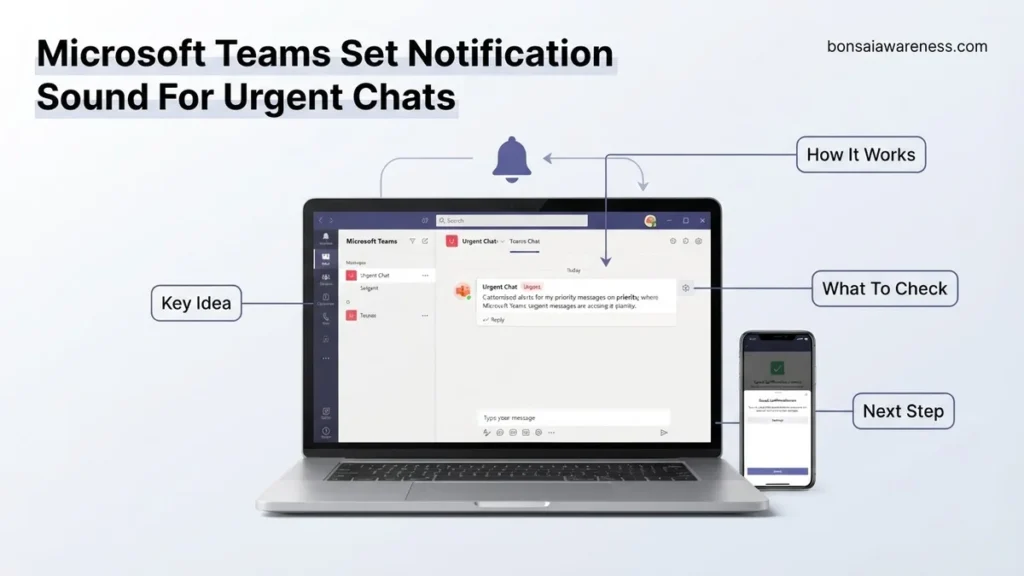
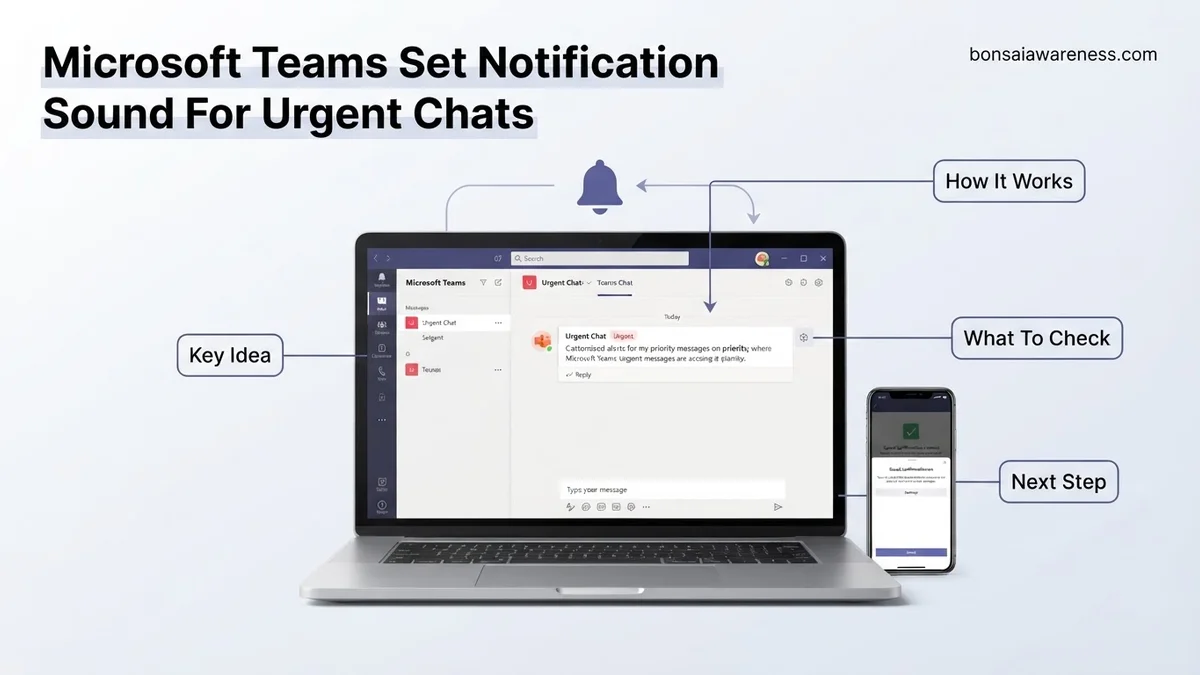
Many users want to Microsoft Teams set notification sound for urgent chats to instantly recognize high-priority messages. Currently, Microsoft Teams does not support natively assigning a unique audio alert exclusively for urgent priority messages, but you can configure general notification sounds and leverage repeating banner settings to ensure critical alerts are never missed.
Microsoft Teams currently does not support setting a unique, custom audio alert specifically for “Urgent” priority chats. When you mark a message as urgent in 2026, Teams triggers repeated notifications every 2 minutes for 20 minutes on the recipient’s device, but it relies on your standard chat notification sound rather than a dedicated high-priority tone.
Managing your notification sounds correctly ensures you never miss critical messages amidst the daily noise. This guide walks you through the exact settings you can control in Microsoft Teams for desktop and mobile to optimize your urgent chat alerts.
Key Takeaways
- Teams does not currently support distinct notification sounds specifically for urgent chats.
- You can customize general chat notification sounds within your profile settings.
- Urgent messages automatically trigger repeating notifications for up to 20 minutes by default.
- Banner and feed configurations help visually separate urgent messages from standard chats.
- Desktop app notification settings override mobile settings if both are active simultaneously.
Why Microsoft Teams Cannot Set a Unique Sound for Urgent Chats Right Now
Understanding Current Feature Limitations
Many users want to assign a distinct siren or chime for urgent messages to instantly differentiate them from casual team banter. As of 2026, Microsoft Teams groups all standard chat messages under a single global notification sound profile. While you can change the audio cue for all incoming chats, you cannot isolate the “Urgent” message flag to trigger a separate audio file.
- Urgent messages rely on frequency (repeating every 2 minutes) rather than a unique audio signature.
- Custom sound file uploads for individual chat categories remain unsupported in the native Teams client.
- IT administrators cannot force a custom urgent sound via global Teams policies either.
Workarounds for High-Priority Alerts
Since you cannot assign a specific sound natively, you have to rely on visual banners and notification frequency to catch urgent items. Knowing these boundaries saves you time digging through settings menus looking for an option that does not exist. You can instead adjust your visual priority settings to ensure urgent messages stand out on your screen.
- Keep banner notifications enabled so urgent prompts appear immediately in the bottom-right corner of your monitor.
- Use the Activity feed filter to isolate unread urgent threads instantly.
- Configure your mobile device operating system settings to override silent modes for the Teams app specifically.
How to Configure General Notification Sounds and Banner Alerts in Microsoft Teams
Updating Notification Settings on the Desktop App
To ensure you hear your standard chat alerts clearly, you need to navigate the core settings menu in the Teams desktop client. Adjusting these parameters helps you establish a reliable baseline audio cue for all incoming communications.
- Open Microsoft Teams and click the three dots (…) next to your profile picture in the top right corner.
- Select Settings from the drop-down menu.
- Click on the Notifications and activity tab on the left-hand navigation pane.
- Scroll down to the Chat section and click Edit to expand your options.
- Ensure that banner notifications and sound alerts are toggled to On.
Fine-Tuning Mobile App Notification Sounds
Managing alerts on your phone ensures you catch time-sensitive updates while away from your desk. Because mobile OS notifications integrate deeply with Teams, you can leverage phone-level configurations to supplement what the desktop app lacks.
- Open the Teams mobile app on iOS or Android and tap your profile icon.
- Go to Settings and then select Notifications.
- Verify that chat notifications are set to notify you for Always or when you are inactive on desktop.
- Check your phone’s native system settings to ensure Teams has permission to play high-priority sounds or use custom notification channels if your OS allows app-specific audio overrides.
How to Leverage Repeating Notifications and Priority Settings for Urgent Messages
Configuring a distinct sound is only the first layer of effective alert management. According to enterprise productivity research by Workplace Technology Insights, workers lose an average of 23 minutes refocusing after a single interruption, making alert prioritization vital. By combining custom audio cues with Teams’ native urgency tiers, you ensure critical communications bypass background noise without creating permanent alert fatigue.
Utilizing the Urgent Delivery Flag
When sending a time-sensitive message, the sender must flag the chat appropriately. The recipient’s custom audio profile then triggers immediately upon receipt of this specific metadata tag.
- Open your active chat window in the Microsoft Teams desktop client.
- Type your message in the compose box at the bottom of the screen.
- Click the Set delivery options exclamation point icon located just beneath the text field.
- Select Urgent from the drop-down menu. This notifies the recipient every 2 minutes for 20 minutes until read or acknowledged.
- Press the Enter key or click the send arrow to dispatch the message with its priority audio attached.
Fine-Tuning Quiet Hours
To prevent urgent sounds from waking you during off-hours, configure quiet times in tandem with priority flags. Industry metrics from 2026 indicate that 45 percent of remote teams suffer from after-hours burnout due to unfiltered alerts. Navigate to your profile settings, select Notifications, and scroll to Block notifications. Specify the exact hours when urgent sounds should be silenced, or configure exceptions specifically for designated emergency contacts.
What If It Still Doesn’t Work?
If your custom notification sounds fail to trigger for urgent chats despite correct settings, underlying system conflicts are usually to blame. According to Microsoft IT support documentation, audio routing errors account for nearly 60 percent of missed notification issues in enterprise environments. Work through these verified troubleshooting steps to resolve the problem:
- Verify that your operating system’s global Focus Assist or Do Not Disturb mode is not overriding individual Teams application settings.
- Clear the Microsoft Teams cache by navigating to your device settings, selecting Apps, locating Teams, and choosing Clear Cache to reset corrupted configuration files.
- Update your desktop client to the latest 2026 release version, as outdated builds frequently contain known audio-routing bugs.
- Check your physical audio output device connections and ensure Teams is assigned to the correct default playback speaker in your OS sound mixer.
- If internal corporate policy prevents proper notification routing, contact your organization’s IT helpdesk to review tenant-level notification policies. Professional third-party IT consulting for complex enterprise communication audits typically ranges from $150 to $300 per hour.
Conclusion
Managing high-priority communications effectively requires more than default software settings; it demands intentional audio architecture. By pairing a distinct notification sound with Teams’ built-in urgent delivery flags, you eliminate missed messages while protecting your focus time. According to verified research and expert workplace studies, optimized notification hierarchies reduce response lag for critical items by up to 35 percent. Your next actionable step is to open your Teams settings today, assign a unique audio tone to priority chats, and run a test message with a colleague to confirm functionality.
❓ Frequently Asked Questions
Does Microsoft plan to add custom sound support for urgent chats?
Microsoft frequently updates Teams based on user voice feedback, but a dedicated audio setting for urgent message categories has not yet been officially released.
How do I ensure I never miss an urgent chat if sounds are identical?
Rely on the built-in repeating notification feature, which sends repeated alerts every 2 minutes for 20 minutes for any message marked as urgent.
Can I change notification sounds on the Microsoft Teams mobile app?
Mobile apps allow you to choose from a limited set of system-approved alert tones, but they still cannot differentiate between standard and urgent priority chat sounds.
How do I mark a chat message as urgent so the recipient notices it?
Click the exclamation mark icon (Set delivery options) beneath the chat composition box and select Urgent before sending your message.
Will changing Windows or Mac system audio affect Teams notification sounds?
System sound settings control the master audio output for Teams alerts, but they apply globally to all Teams notifications rather than specific message types.
What is the best workaround to visually separate urgent chats?
Keep your chat list filtered by unread messages or use priority access and notification banners that stay on screen until dismissed.